What Color Furniture Goes With Light Wood Floors?

Time:2026-10-14 Author:Liam
0%

Choosing furniture for pale timber flooring can feel simple until undertones begin competing. Warm oak may make gray upholstery appear cold, while yellow-toned wood can intensify beige fabrics. This guide explores What color furniture goes with light wood floors, using practical styling decisions rather than rigid decorating rules.

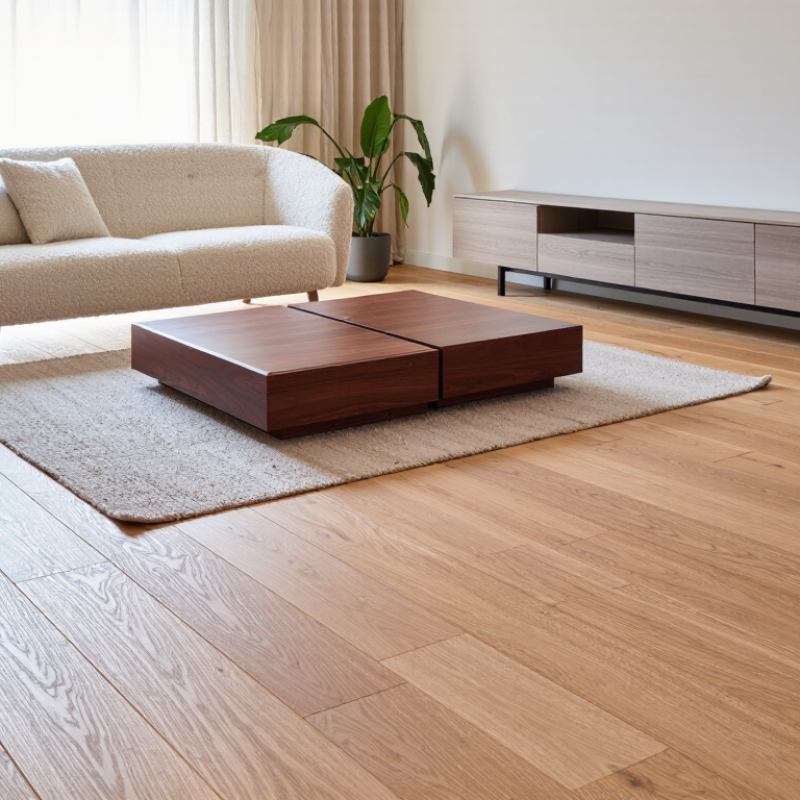
Interior designer and color consultant Maria Killam explains, “The best way to choose a color is to compare it with the fixed elements in the room.” Her advice is especially useful here. Light floors already reflect brightness, so furniture should add structure, contrast, or gentle warmth. Soft white, sand, mushroom, muted olive, and charcoal can all work beautifully. Deep walnut furniture creates definition, while pale ash pieces produce a quieter, layered room.

Texture matters too. A cream boucle sofa beside a light oak floor feels softer than a smooth white leather sofa. A black metal table can sharpen the space, but too much black may make the room feel visually heavy. I once assumed matching pale furniture would create the most spacious effect. It did not. The room looked washed out and strangely unfinished.

Begin with a floor sample, fabric swatches, and the room’s natural light. View them in the morning and evening. Small mistakes reveal useful information. Your ideal combination may not appear in a showroom photograph. It should feel balanced in your actual home, with its changing shadows, existing finishes, and lived-in details.
What Color Furniture Goes With Light Wood Floors?

Identify Light-Wood Undertones Using CIE L*a*b* Color Measurements

What Color Furniture Goes With Light Wood Floors?

Light wood floors rarely have a neutral appearance. Their undertones may be yellow, red, gray, or slightly green. CIE L*a*b* measurements make these differences easier to see. Under ISO/CIE 11664-4:2019, L* describes lightness, while a* tracks red-green balance and b* tracks yellow-blue balance. A typical pale oak sample might measure L* 72, a* 4, and b* 18.

Measure the floor beside a white reference tile, not from a phone photograph. Use a spectrophotometer under D65 illumination, approximately 6,504 K, as specified in CIE 15:2018. Compare furniture samples using Delta E 2000. Smaller differences indicate closer color relationships, although no universal “perfect match” exists.

A warm floor with high b* values usually supports walnut, caramel, cream, or muted olive furniture. A floor with low b* and slightly negative a* values often works better with ash, mushroom, charcoal, or soft blue-gray pieces.

Furniture scale still matters. A 2024 residential design survey from the National Kitchen and Bath Association reported continued interest in natural wood tones and mixed materials, but color harmony cannot be judged from trend data alone.

Test a 30-centimeter sample beside the floor during morning and evening light. I have seen beige upholstery turn pink near red undertones. It looked correct in the showroom.

The measurement can also mislead. Gloss, grain direction, finish age, and nearby wall colors change readings. Recheck three floor planks and two furniture samples before ordering.

Select Furniture Contrast with the 60-30-10 Interior Design Rule

Light wood floors need furniture contrast, not competition. The 60-30-10 rule offers a practical structure: 60% dominant color, 30% supporting tone, and 10% accent color. Treat the floor as part of the 60% foundation. Its pale oak or maple tone already creates visual warmth. Choose larger furniture in charcoal, deep olive, muted navy, or warm taupe for the 30% layer. Darker upholstery makes the floor feel brighter and more intentional.

The National Association of Realtors’ 2022 Remodeling Impact Report gave hardwood refinishing a Joy Score of 10 out of 10. It also reported a 147% recovered cost estimate for refinishing. That value supports preserving the floor’s character instead of covering it with matching beige furniture. The 10% accent can appear through rust cushions, black lighting, terracotta ceramics, or a patterned rug. Keep accents repeated twice or three times. Small echoes feel designed.

The Global Wellness Institute’s 2024 report valued the wellness real estate market at 438 billion dollars in 2023. This reflects growing interest in calm, tactile interiors. Natural linen, woven textures, and rounded wood details can soften strong contrast. Still, the rule is not a law. My first sample boards often look balanced under daylight, then too yellow at night. Test upholstery beside the floor in morning and evening light. A perfect formula does not exist.

Compare Furniture Finishes by Light Reflectance Value (LRV)

What Color Furniture Goes With Light Wood Floors?

Light wood floors can look warm, bright, or slightly gray under different lamps. Furniture LRV helps make that choice measurable. LRV means Light Reflectance Value, ranging from 0 for absolute black to 100 for perfect white. ASTM E284 defines reflectance as the percentage of light returned from a surface. CIE 15:2018 also stresses that readings change with the light source, observer, and finish.

Test samples in the actual room. Screens deceive. A pale matte finish may sit near LRV 60–80, while honey-toned wood often appears around 45–65. Walnut-style finishes commonly fall near 20–40. Charcoal finishes can drop below 20. These are practical design ranges, not laboratory guarantees. Grain, stain depth, sheen, and surrounding colors alter the result.

For a soft, continuous room, choose furniture within 10–15 LRV points of the floor. A light oak floor paired with LRV 60–75 furniture feels calm and spacious. For stronger definition, choose LRV 20–40, such as a medium brown cabinet or muted green chair. The contrast gives the pale floor visual weight. High-gloss surfaces reflect more directional glare, even when their measured LRV looks moderate. Matte finishes usually appear quieter. The Illuminating Engineering Society emphasizes the importance of surface reflectance in perceived brightness, but LRV alone cannot predict comfort. I once matched a floor and table perfectly by number, yet the orange undertone felt wrong. Color temperature mattered more than expected.

Match Furniture Scale Using the 2:3 Room-Proportion Guideline

Light wood floors make a room feel brighter, but oversized furniture can quickly erase that openness. The 2:3 guideline offers a practical starting point: let the main furniture grouping occupy roughly two-thirds of the room’s usable width or length. In a 12-foot living room, a sofa and chairs should usually form a grouping near eight feet wide. Keep the remaining space open for movement.

Use the guideline with real measurements. The National Kitchen and Bath Association’s Planning Guidelines recommend about 36 inches for comfortable circulation paths. That clearance matters beside a sofa, coffee table, and doorway. A light oak floor also benefits from visual breathing room. Choose furniture with raised legs, slimmer arms, or open shelving. Darker upholstery can anchor the pale floor, while warm beige, olive, and muted blue prevent the space from feeling washed out.

The 2024 ASID Trends Outlook highlights adaptable, multifunctional rooms, so fixed proportions should not control every decision. I have broken the 2:3 rule in narrow rooms. It worked when the sofa stayed shallow and the walkway remained clear. The rule is useful, not sacred. Measure the rug, table, and seating together before buying anything. A 2024 Houzz & Home Study also tracks living areas as active renovation spaces, reinforcing the need for flexible layouts rather than furniture chosen by appearance alone. Check the scale from every entrance. Fine. Sometimes the first arrangement is wrong.

What Color Furniture Goes With Light Wood Floors?

Match furniture scale using the 2:3 room-proportion guideline

The 2:3 guideline suggests that a major furniture grouping should span about two-thirds of the room's width. For light wood floors, balanced colors such as walnut, charcoal, muted sage, warm beige, and soft ivory add contrast while keeping the room visually grounded. The measurements shown are calculated examples based on the two-thirds proportion.

Check Color Accuracy Under 2700–4000K Lighting and CRI 90+ Bulbs

Light wood floors usually pair well with warm white, soft gray, muted green, clay, navy, and natural beige furniture. However, the right choice depends on how the room is lit. A pale oak table may look creamy at night but slightly yellow beside a window. I have seen this shift mislead homeowners during quick showroom visits.

Check furniture colors under 2700K, 3000K, and 4000K lighting. At 2700K, warm bulbs can make beige upholstery look golden and gray fabric appear muddy. Around 3000K, wood often retains a comfortable warmth without looking overly orange. At 4000K, cooler light may reveal blue, green, or pink undertones that were easy to miss. Test samples at different times of day.

Use bulbs with a CRI of 90 or higher when judging upholstery, paint, and wood finishes. High CRI lighting shows subtle color differences more accurately, especially in reds and natural wood tones. Place a fabric swatch beside the floor, then view it from several angles. Small changes matter. Glossy surfaces can reflect the ceiling and distort your impression.

A useful pairing is light wood with charcoal seating and warm ivory cushions. Sage green works well when the floor has neutral undertones. I once chose a soft gray that looked balanced at 4000K, but it felt lavender under evening light. That mistake still matters. Color testing should happen in the actual room, not only on a phone screen.

FAQS

How can I identify the undertone of a light wood floor?

Measure it with CIE Lab values beside a white reference tile. L shows lightness, a shows red-green balance, and b shows yellow-blue balance. A typical pale oak may measure L 72, a 4, and b 18.

What furniture suits a warm-toned light wood floor?

Higher b values usually indicate warmer yellow undertones. Try walnut, caramel, cream, muted olive, or warm beige furniture. Test a 30-centimeter fabric sample before buying.

Which furniture colors work with cooler light wood floors?

Low b values and slightly negative a values suggest cooler undertones. Ash, mushroom, charcoal, and soft blue-gray pieces may work well. Still, gray can appear lavender under evening light.

Can a phone photograph show the floor’s true color?

Not reliably. Cameras change color through exposure, white balance, and nearby reflections. Use a spectrophotometer under D65 illumination when accuracy matters. Then compare furniture samples using Delta E 2000.

How should I test furniture colors in the room?

Place fabric and wood samples beside three different floor planks. Check them near a window, a doorway, and the main seating area. View them in morning and evening light. Do not trust one viewing.

Which lighting temperatures should I use for color testing?

Compare samples under 2700K, 3000K, and 4000K lighting. Warm 2700K bulbs can make beige look golden and gray look muddy. Cooler 4000K light may reveal blue, green, or pink undertones. Use bulbs with CRI 90 or higher.

How large should furniture be in a room with light wood floors?

Let the main furniture grouping occupy roughly two-thirds of the usable room length or width. In a 12-foot room, an eight-foot seating group can be a useful starting point. Keep about 36 inches for comfortable movement. The rule is not sacred.

How can I keep large furniture from making the room feel crowded?

Choose raised legs, slimmer arms, or open shelving to preserve visual space. Measure the sofa, rug, table, and walkway together. Check the arrangement from every entrance. Sometimes the first layout is wrong.

Conclusion

Choosing what color furniture goes with light wood floors starts with understanding the floor’s undertone. Use CIE L*a*b* color measurements to determine whether the wood appears warm, cool, or neutral, then select furniture that either complements or intentionally contrasts with it. Warm-toned floors pair well with earthy or softly contrasting shades, while cooler floors can support gray, blue, green, or balanced neutral furniture.

Build the room with the 60-30-10 design rule: use a dominant background color, a secondary furniture tone, and a small accent color for visual interest. Compare finishes through Light Reflectance Value (LRV) to control brightness and avoid a washed-out or overly dark result. Furniture should also follow the 2:3 room-proportion guideline, creating a balanced relationship between pieces and available space. Finally, check colors under 2700–4000K lighting with CRI 90+ bulbs, since artificial light can significantly change how wood, upholstery, and finishes appear.

Liam

Liam

Liam is a dedicated marketing professional with a profound expertise in the industry, where he excels at highlighting the unique advantages of our core products. With a keen understanding of market trends and consumer needs, Liam frequently updates our company’s professional blog, providing......